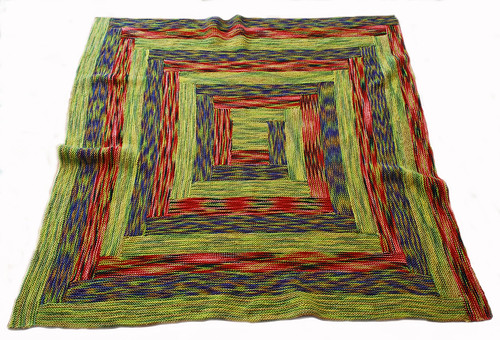
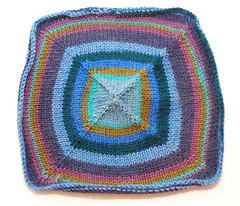
 I finished this little blanket just shy of the two year mark. I started knitting this blanket in June 2007 and finally completed it last weekend. I am so glad to have it finished and out of the WIP pile. The blanket is finished and that is the best part - it is a little smaller than I had originally hoped, but there is now way I have the patience to order more yarn and add more knitting time to this project. The last few rows of garter stitch really started to drag on and on!
 I don't think I can knit another log cabin blanket - or at least one the is made up of only one square. I might be able to complete one if I used smaller individual squares. but the one large square was what enabled me to get the swirl of the three colors. I think one of my mistakes was trying to knit a blanket on size US #6 needles; probably too small for a real blanket. I won't be knitting another blanket with needles that small again.
The finished blanket is 40 inches square. It is probably a little small for an adult to use for curling up on the couch. It is also a little on the heavy side and the garter stitch does make it kind of stretchy. But it is machine washable and the stitching is nice and tight.
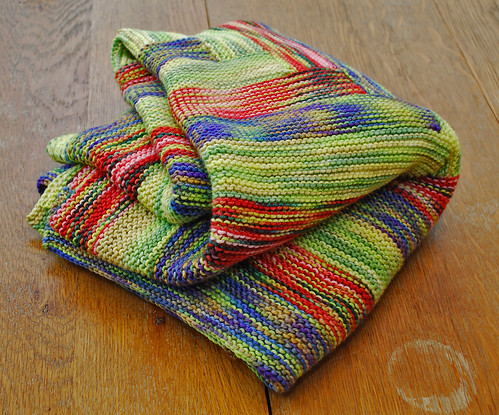 I had thought about finishing the blanket with an applied i-cord border, like I did for my Lizard Ridge Afghan. but in the end I just finished with a regular bind off; the edge is actually kind of nice and simple that way.
I had a little yarn left over. I probably could have knit two additional bars, but I liked how I ended up with an exact square with a matching amount of bar on each side of the center square. Each bar is only two inches wide, so it wouldn't have added a whole lot to the finished size anyway.
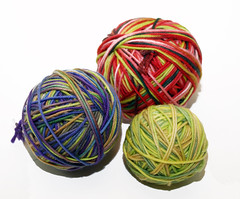 Project Info
Pattern: How to Log Cabin from Mason Dixon Knitting
by Kay Gardiner and Ann Shayne
Yarn: Socks That Rock Heavyweight
100% super wash merino wool
each skein: 350 yards / 6.98 ounces
colors: Lemongrass, Thistle, Knitty Rocks / 2 skeins each
Needles: addi TURBO US# 6 (4 mm)
Finished Size: 40" square
Notes: Center square is 4x4 inches and each band is approximately 2 inches wide


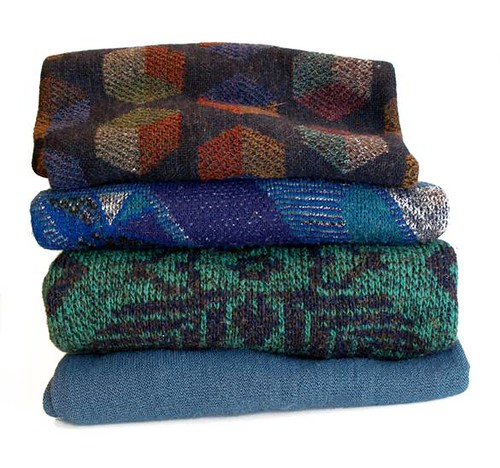 First up are the men's sweaters. I'm not sure how well these will felt. They are all wool except the bottom sweater, which is alpaca. Based on the fiber content, they should all felt. But the green sweater is really thick and the top two are color worked so they are thick in their own way too. I have a feeling that these sweaters will make their way to new homes or at least the local Salvation Army drop off point.
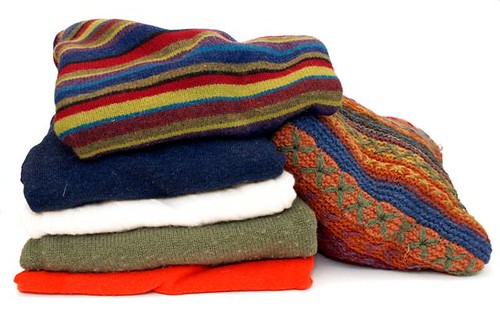 Now my sweaters might offer a little more promise. I think the striped sweater on top would make a fun project. A couple of them have very small holes that make them bad candidates for donation. I'm thinking that the striped one will be fun to felt and use to make a bag or hot pads. The sweater on the far right is pretty thick and I'm not sure that the color work will felt well, but I might just give this one a try. The white sweater is one of those with a small hole but it is 100% cashmere and it just seems wrong to throw it away or felt it.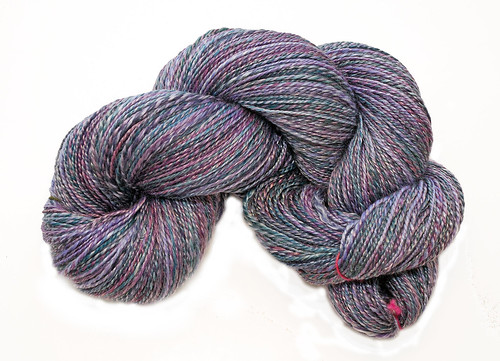
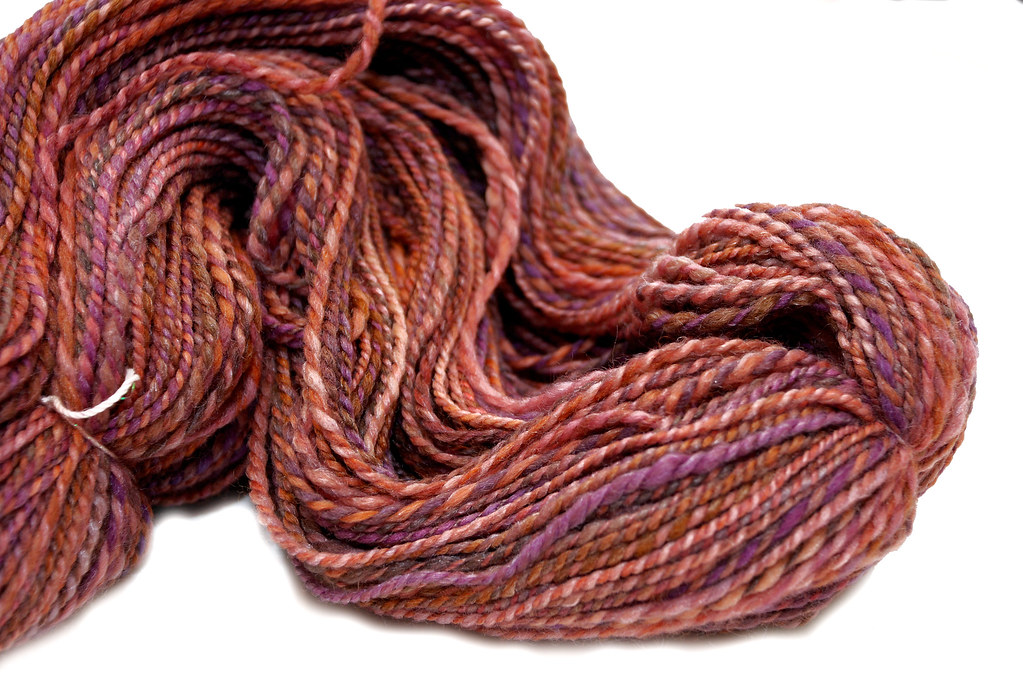
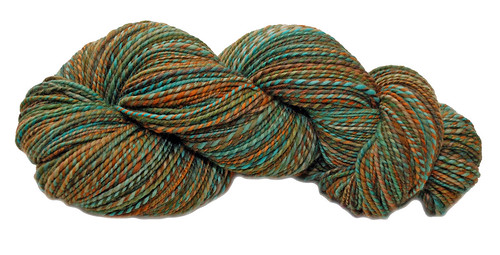
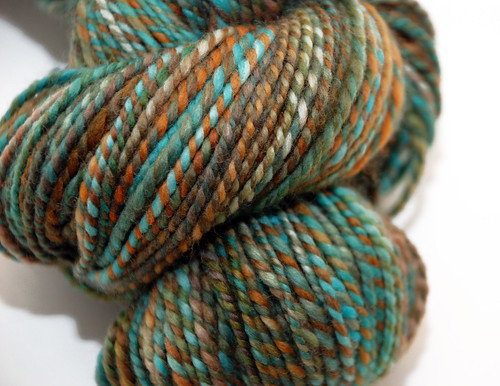
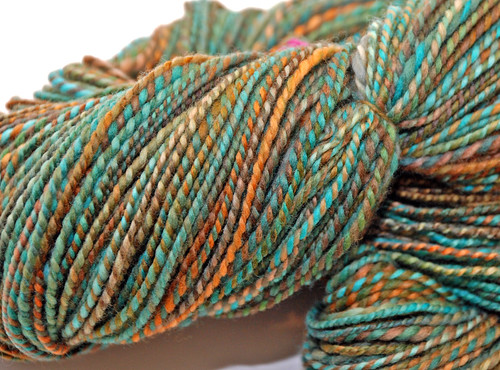
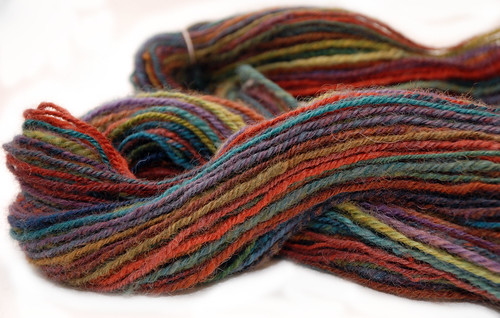
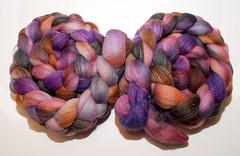
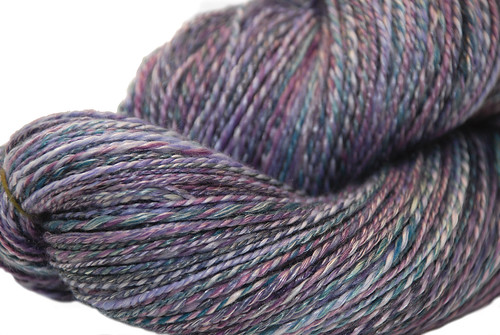 I really liked working with this fiber. It was dyed beautifully and it drafted very easily. I was able to spin up two fairly consistent singles and make a nice drapey two ply yarn.
 I plan on knitting the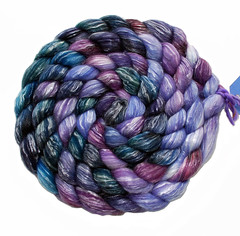
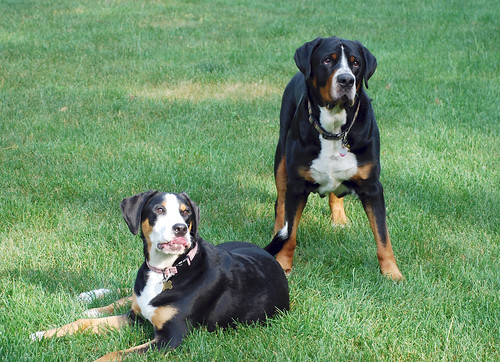
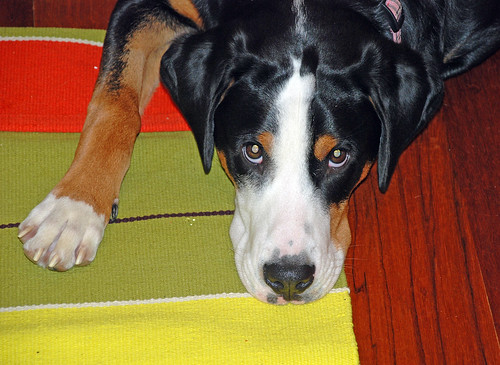 She has been the more ornery of the two hands down. She has chewed up two pairs of prescription eye glasses and a fancy remote control to boot. I'm hoping we are approaching the end of these puppy behaviours. She does seem to be maturing - but it sometimes seem painfully slow. But she'll get there, and besides, she is mostly just to cute to stay mad.
 Otherwise, both are doing well and are enjoying the last bits of spring. Soon it will be too hot for them to do much outside. When it gets hot outside it is sometimes a chore to get Sherman even to step off the porch. I was hoping to get to the dog park this weekend, but we had too many chores around the house.
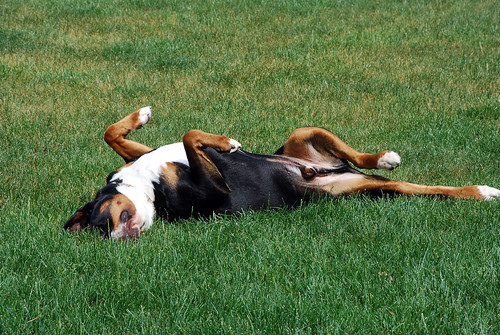 So we settled for playtime in the yard. Sherman likes rolling in the grass.
 Scarlett enjoys exploring by smelling and tasting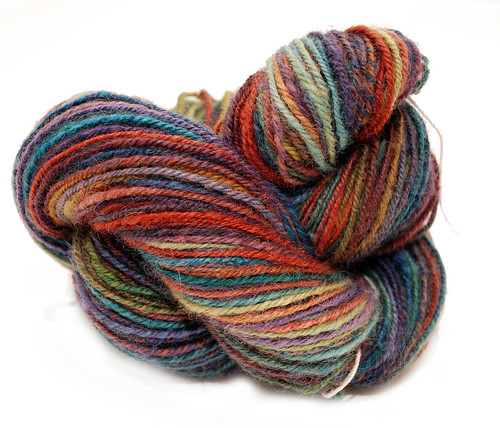
 In order the keep the color repeats as long as possible, I did not spilt this roving in
  The fiber was a little bit coarser than I normally spin. I would guess that the fiber was carded and not combed. Carded fiber is always a little more challenging for me to spin. I like to spin smooth worsted style yarns, but carded fiber makes that a little harder. But in the end, I'm happy with the results.

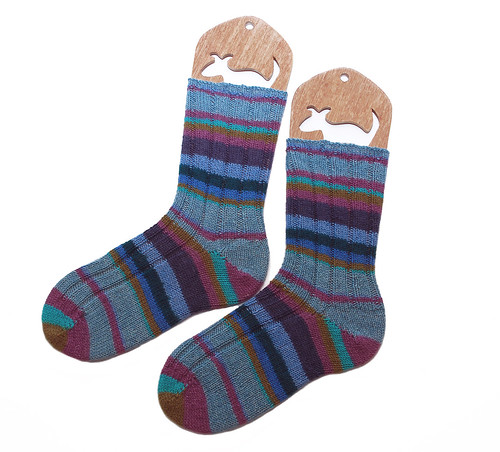
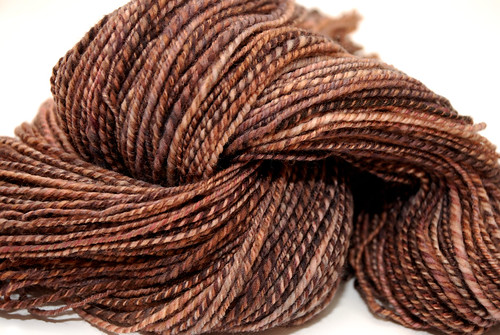 I think that I'll be using it for socks. Not socks that are meant to be worn
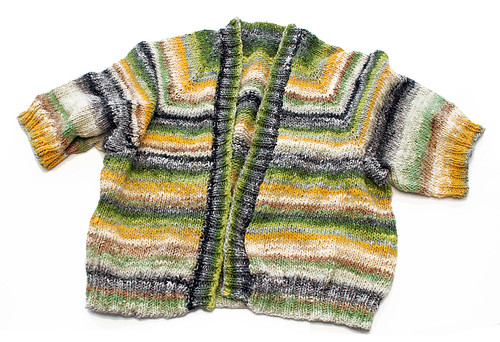
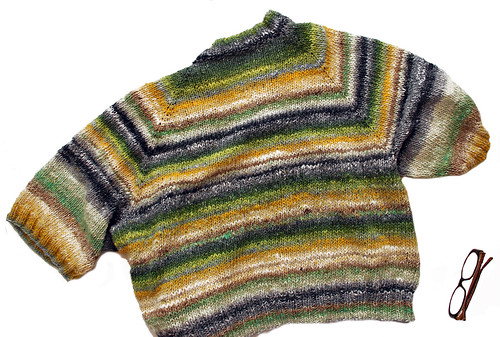 The sweater was quick because of the large needles and the yarn. I knit the sweater according to the instructions for the x-large size. The pattern called for 1,060 yards of yarn. I bought 5 skeins of the Taiyo (1,090 yards), but only ended up using 4 skeins (872 yards). I ended up using less yardage than the pattern called for in the large size. My gauge was slightly off; I got 13 stitches over 4 inches and the pattern called for 14, but I still didn't expect that big a difference in the final yardage count. The finished sweater is a little too roomy, but that will work okay for the office.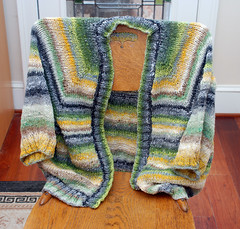
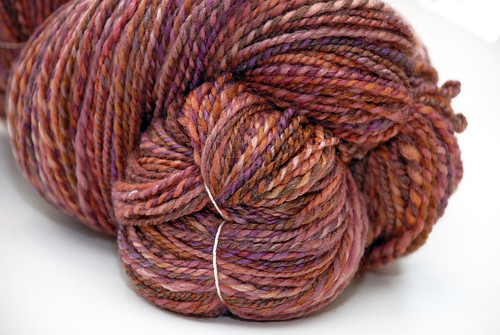


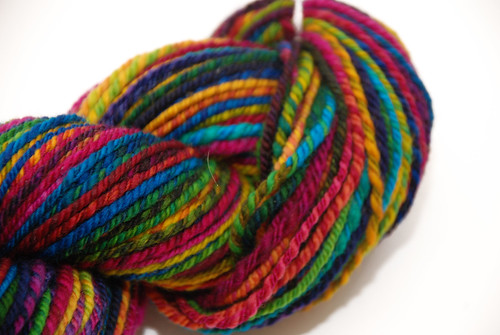
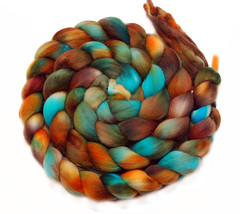
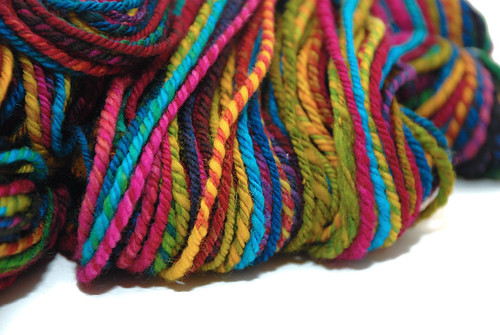 The fiber is billed as spiral dyed and I don't know exactly what that means. But the colors in the fiber are really rich and saturated. Surprisingly enough, there was very little, if any, dye bleed out during the yarn's hot bath to set the twist. The fiber came in two identically dyed pieces and the color repeats were nice and long. I did not divide the fiber into strips before spinning. I tried to preserve the long color repeats that showed up in the fiber.
 The fiber was easy to draft and nice to spin. I only wish I had a little more so I ended up with more yardage. But I think I have enough for a hat.

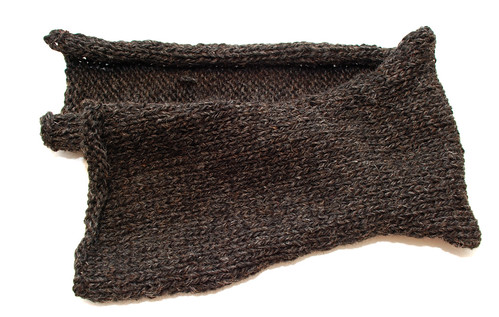 Last Wednesday I attended a knitting focus group meeting and the topic was old works in progress that hadn't been worked on for awhile. The idea was to bring a project to the meeting and make a firm decision on whether to complete it or just terminate the whole thing. I have to say, most projects brought to the meeting were frogged. But I decided to move forward with mine.
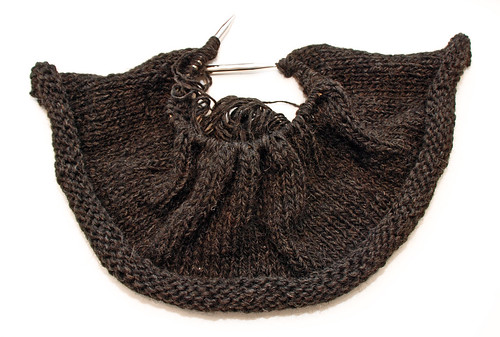 The project in question is the
 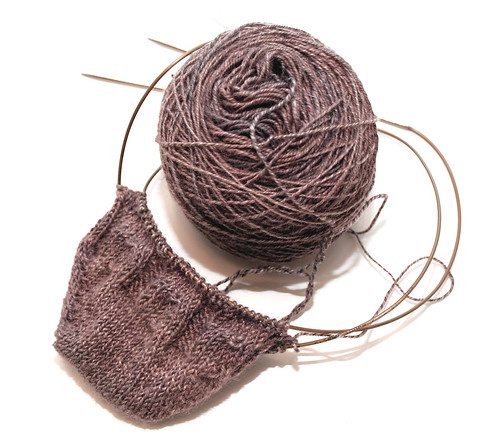 I had to start another sock too. I'm working on a
 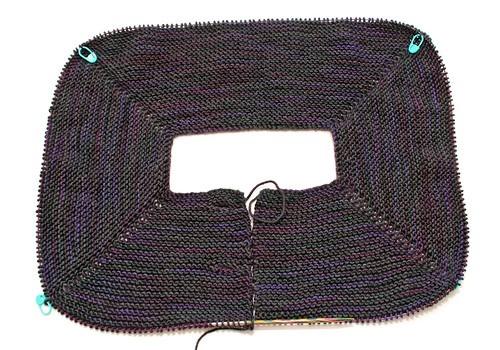 I've been working on a sweater too! I'm knitting a
 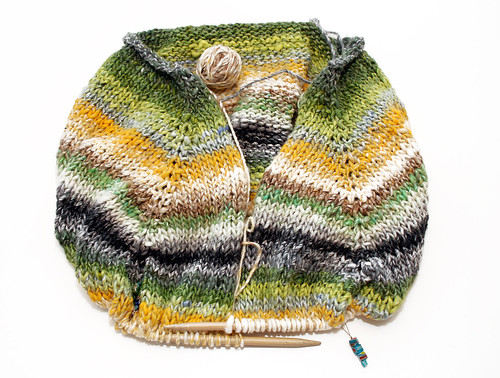 But in the mean time, I started another sweater last Friday. I'm knitting a nice little open cardigan to wear in the office to beat the chill of the summer air conditioner. Our office is kept at deep freeze temperatures all summer, so this will definitely get used this season. I'm knitting it out of Noro Taiyo which is a cotton, wool, and silk mix. I love how the yarn feels and it has all the typical Noro characteristics. I'm to the point of splitting off the sleeves. The yarn is worsted weight and I'm knitting on size US 10.5 needles, so this project is moving right along.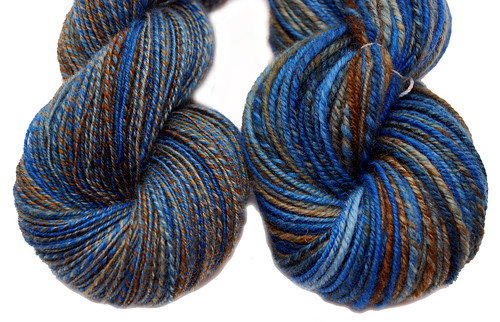
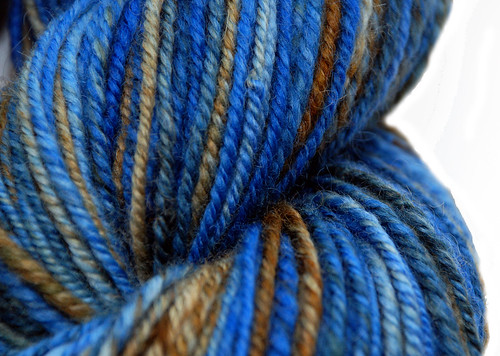 I ended up with eight ounces of fiber and decided I wanted to spin the fiber a little different than I normally do. I decided to try for a nice thick chain plied yarn to try and keep the color repeats together. So that is how I spun up the first four ounces. I tried for a low twist single in an effort to keep everything fluffy and light. But in several places I didn't put enough twist and my singles came apart while I was plying.
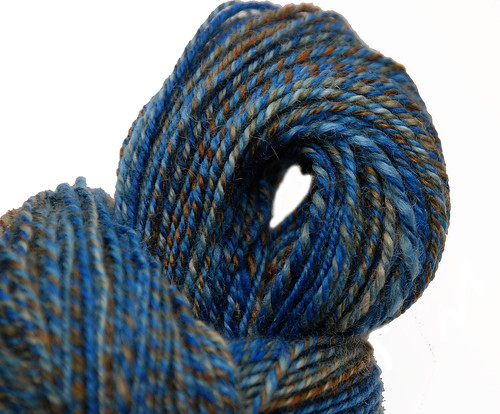 I decided to do a true three ply yarn with the other four ounces and I enjoyed spinning and plying that a lot more. I thought it would also be interesting to see how different the finished yarns look. I think it will be fun now to see how each actually knits up. I'm thinking I'll try for a pair of socks out of the regular three ply and a hat or maybe mittens if there is enough yardage in the chain plied skein.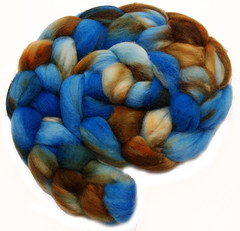

 I like the slip stitch design in the pattern. I think it works really well for the variegated hand painted yarn I picked. The pattern was easy enough too, but it was a little convoluted. The pattern is written toe up and after knitting the toe of the sock there is a set of instep increases. Then you knit the foot and before the heel is another set of increases. After the heel, you have more increases and then you have to pay attention to the pattern and borrow a few stitches on one of the pattern rows from the back needle.


 Posts
Posts